






Prevent the loss of tools
Tips and advice to prevent foreign object damage
If you or your team service or repair commercial machinery, industrial equipment or even aerospace engines and systems, preventing foreign object damage is crucial.
Foreign Object Damage (FOD) is damage caused by foreign objects entering machinery or systems, notably in aviation. These objects, like debris or tools, can lead to equipment failure or structural damage. Preventive measures include regular inspections, FOD detection systems, and cleanliness protocols to reduce risk.
However, one of the most important strategies to prevent foreign object damage is robust tool control processes.
As such, in this guide, we’ll cover:
- Tool control regulations.
- The benefits of tool control.
- A tool control solution.
Contents
Introduction
Foreign object damage in the aviation and similar industries
Modern aviation is one of the safest and most secure means of transportation, partly due to the rigorous safety and security checks.
But what most people don’t know is the extraordinary efforts airlines are making. There are, in fact, many measures and guidelines in place to ensure that planes are as safe as possible.

Why is foreign object damage such a problem?
As recently as 2015, an Airbus helicopter crashed in Australia after an engineer left a tool behind during maintenance. Similarly, a screwdriver caused significant damage to an aeroplane propeller, which led to additional damage to the fuselage during an incident in 2018.
So, whilst leaving a tool in or near an aircraft or its engine is an inconvenience, it is also a potentially catastrophic safety risk. As a result, proper tool control is an essential part of eliminating aircraft accidents and incidents.
Tool quality control issues also cost the aviation industry more than £500 million annually.
Tool control is also vital in preventing expensive damage in various other applications, including servicing and maintaining industrial equipment and machinery.
Tool control
What is it, and why it's important
One of the critical measures implemented by airlines and enforced by regulatory bodies is ensuring that engineers or service technicians do not leave foreign object debris (FOD) in any part of the engine or aircraft systems after routine maintenance.
If a toolbox contains a random jumble of wrenches, screwdrivers and other tools, how can you tell if something is missing?
As such, organisations such as airlines must be able to inspect and monitor the tools and equipment used to maintain their aircraft.
Ensuring that all aviation mechanics follow these regulations can be time-consuming for the mechanic and the airline. It is, however, a critical process and is the primary goal of most tool control policies.
Tool control essentially involves assigning a designated storage location for each tool when not in use. Doing this enables swift identification in case of loss of or misplacing tools or equipment, thus preventing any possibility of tools causing potentially catastrophic damage.

Aviation regulations
What are the CAA and FAA tool control regulations?
Most UK airlines have a tool control and accountability policy, as outlined by the Civil Aviation Authority (CAA). Specifically, Policy 145-2 Equipment, Tools and Materials – OTAR Part 145.109. The Federal Aviation Administrator (FAA) policy in the United States is CA number 150/5380-5B.
The policies are naturally very similar, but in the UK, the CAA states:
Tools and equipment
“(a) All tools and equipment which need to be checked for maintenance or calibration because they are necessary for measuring specified dimensions and tightening torques, etc., must be identified and listed in a control register. Including all personal tools and equipment that the organisation agrees to use.
Tool control
(b) Control of these tools and equipment requires that the organisation have an inspection/maintenance procedure. And, where applicable, regularly calibrate these items and communicate to users that the item is on schedule for inspection, service, or calibration.

Tool labelling
(c) A clear system of labelling all tools, equipment and test equipment is therefore necessary to give information on when the next inspection, service or calibration is due and whether the item is unusable for any other reason where it may not be obvious. A record must be maintained for all precision tools and equipment, as well as a record of calibrations and standards used.
(d) Inspection, maintenance or calibration shall regularly follow the equipment manufacturer’s instructions, except where the organisation can demonstrate through historical calibration and/or maintenance results that a different period is appropriate in a particular case.
Implementing tool control
Using shadow board foam to prevent costly damage
Tool control is essential to ensure that engineers and service technicians can account for all tools upon completing their tasks. Your staff can only achieve this if every tool has a place where it should always be stored when not in use.
The CAA regulation also states that tools must be identifiable, listed, labelled and available for regular inspection.
One of the most effective ways to achieve this is tool control foam.
What is tool control foam?
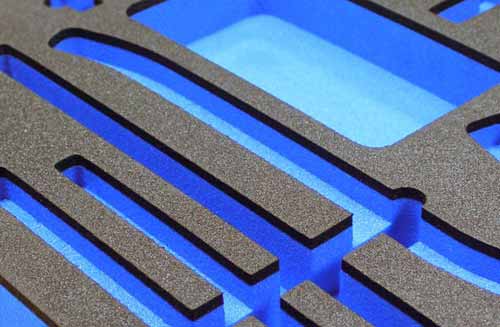
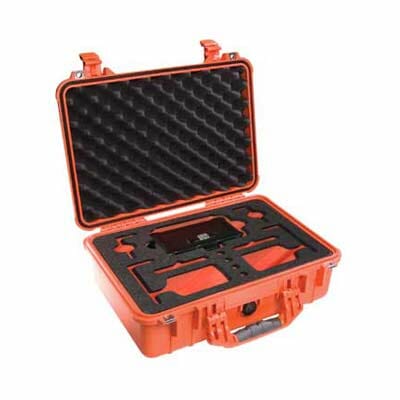
Tool control foam, or shadow boards, is a two-tone foam insert for a toolbox or protective case.
Usually, tool control foam has a black or dark-coloured top layer, with a bright, contrasting foam colour for the pockets or recesses for keeping tools.
This colour difference can quickly allow engineers and technicians to see if a tool is not present in its designated location. Effectively, it highlights if your staff has left any tools inside the equipment or engine being serviced or repaired.
As tool control foam has specific recesses for each tool, those who use these shadowboards also report that it is much easier and faster for them to find the tool they require. Coupled with laser etching of part numbers or tool names directly onto the foam, shadow boards allow staff to work faster and more efficiently.

The benefits of foam for tool control
Efficiency and FOD reduction using tool control foam
In addition to allowing engineers to quickly and easily check their tool inventory, using Shadow Foam to store tools has several other benefits:
Reduces the risk of foreign object debris
FOD, or Foreign Object Debris, is one of the aviation industry’s biggest dangers. However, it can also cause significant, costly damage to various industrial machinery and equipment.
Keeping tools organised and secure using foam inserts reduces the risk of your team accidentally forgetting tools that could cause severe damage and safety risks.
Improves engineer efficiency
When each tool has its own space in the toolbox, it quickly highlights when one is missing. As a result, staff are less likely to lose tools or show up to a job without the tools they need.
When the toolbox is neat and organised, it also helps engineers complete their tasks faster and more efficiently.
Secures tools
Storing tools in foam board rather than leaving them loose in a toolbox also protects and secures individual tools to prevent damage during transport.

Reduces expenses related to damage
Specific tools and equipment can be extremely expensive, especially for applications requiring specialist equipment.
Storing tools in foam inserts significantly reduces, and can even eliminate, damage to the tools caused by mishandling, impact and vibration. The foam provides cushioning protection, absorbing any forces that could cause them to break.
Improves accountability
Military and commercial engineers, alongside those working in the aviation and aerospace industries, can benefit from improved accountability and audit trails.
Tool control foam can be used as part of this process.
Summary
Securing shadow boards for tool control
Shadow boards have several inherent benefits for the aerospace industry and a considerable range of other applications. They reduce the risk of FOD, increase efficiency, keep tools secure and improve accountability with the reduced risk of damage.
At GWP, we have a team of experts with vast experience in maximising the effectiveness of all types of packaging – including shadow boards, foam inserts and protective cases. So, if you require assistance optimising your tool control foam, please do not hesitate to get in touch.
Further reading

About the author

Ian is one of the founding Directors of GWP, using his broad knowledge acquired over more than 30 years to oversee new business strategy
Read full bio
Featured products
View the products in this guide





Get in touch
Here to help
For full details on how GWP treats your data, please view this Privacy Policy. Your info is not shared with any third party.
Related guides
Free PDF download

Plastazote® foam selection and options
Get your free guide detailing the all of the grades, colours and options available when using Plastazote® foam.